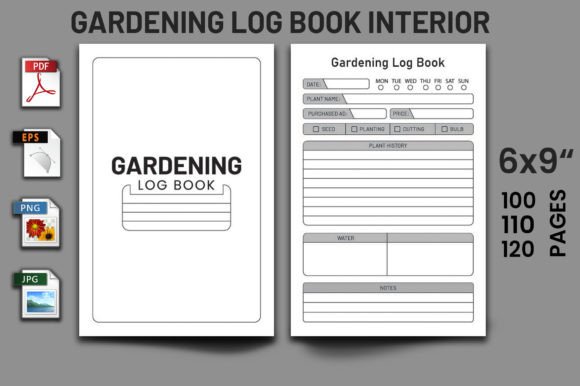
The Gardening Log Book KDP Interior: A Tool for Efficient Publishing
For anyone involved in self-publishing on Amazon's Kindle Direct Publishing (KDP) platform, the search for high-quality, reliable book interiors is a constant process. The market offers a wide array of templates, from generic journals to highly specialized planners. Within this space, products like the Gardening Log Book - KDP Interior represent a focused solution for a specific niche. Understanding what this product is, how it compares to other approaches, and where its strengths and limitations lie can help publishers make more informed decisions about their resources.
Defining the Gardening Log Book KDP Interior
The Gardening Log Book - KDP Interior is a pre-designed, formatted template specifically intended for creating a physical log book for gardeners. It is marketed as a KDP "interior," meaning it is the complete inside layout of a book, ready for a publisher to combine with their own cover design and upload to Amazon. The core offering is a set of digital files. As described, it typically includes 100 pages of pre-formatted content, tested for Amazon KDP's specifications, with a trim size of 6"x9". The key distinction from many other templates is its file flexibility. It is offered not just as a static PDF, but also in vector formats like EPS and source files (often Adobe Illustrator), which are editable and resizable. This means a publisher can theoretically adjust the design, change the size, or modify elements to better suit their vision, rather than being locked into a fixed layout.
Core Features and Their Practical Implications
The advertised features highlight several points important for KDP publishers. The claim of being "100 tested on Amazon KDP" addresses a common pain point: upload errors due to formatting issues. A pre-tested interior reduces the risk of technical rejection. The inclusion of multiple file types (PDF, EPS, PNG, JPG) offers different levels of control. A ready-to-print PDF is perfect for a publisher who wants a straightforward, no-change upload. The vector and source files, however, cater to a different user: someone with access to design software and the skill or willingness to customize. This dual offering is a significant aspect of its value proposition.
Furthermore, the product is described as having "No Bleed," which is a specific print requirement. A no-bleed interior simplifies the design process but also limits the style to layouts where artwork or color does not extend to the very edge of the page. This is a practical tradeoff that makes the template easier to handle for beginners but may not suit more graphically intense book designs.
Comparing Approaches to KDP Interior Creation
When evaluating the Gardening Log Book - KDP Interior, it's useful to consider the broader spectrum of methods available to create a KDP book interior. Each approach carries different costs, time commitments, and skill requirements.
- Full Custom Design: Hiring a graphic designer or creating a unique interior from scratch offers maximum originality and brand alignment. This is the most resource-intensive path, requiring significant budget or advanced design skills. For a niche log book, a fully custom design might be unnecessary unless the publisher is building a standout, premium series.
- Using Basic Word Processors: Many publishers start by designing interiors in Microsoft Word or Google Docs. This is low-cost and accessible, but achieving professional, consistent formatting that meets KDP's strict standards can be challenging and time-consuming. Output is usually limited to a PDF, with little flexibility for easy resizing or major redesign.
- Purchasing Pre-made Templates: This is the category the Gardening Log Book Interior falls into. It balances cost and professionalism. The tradeoff here is between fixed templates and editable templates. Many low-cost templates are sold as non-editable PDFs only. You get a working product, but you cannot change the trim size, font, or layout without recreating it entirely. The editable vector files included with this particular product aim to mitigate that limitation.
The Gardening Log Book KDP Interior sits within the pre-made template category but leans towards the flexible side due to its included source files. This positions it as a potential middle ground for publishers who want a reliable starting point but retain some control over the final product.
Strengths and Potential Best-Fit Situations
The primary strength of this interior is its niche-specific design combined with technical readiness. A publisher looking to quickly launch a gardening log book avoids the hours needed to design and test appropriate pages—plant records, harvest tracking, soil notes, etc. The KDP testing claim reduces technical anxiety. The editable files are a standout strength for a specific audience: publishers with moderate design software knowledge who might want to adjust colors, add a logo, or experiment with a different trim size for other platforms.
It may be the right choice for:
- Publishers who have identified a demand in the gardening niche and want a fast, proven starting point.
- Those who value having the option to customize later, even if they don't use it immediately.
- Publishers operating a series of log books across different topics, where having a modifiable base template can streamline creating variations.
The "100 pages" offering also provides a substantial book length, which can be appealing for perceived value, though publishers should consider whether the exact page count aligns with their pricing and printing cost calculations.
Limitations and Decision Factors
While the features are appealing, there are inherent limitations and tradeoffs to consider with any pre-made template. First, the design style is fixed. Even with editable files, the core layout, graphic elements, and page structure are predetermined. If a publisher's brand requires a radically different aesthetic, this interior might require so much modification that starting from scratch becomes more efficient. The no-bleed feature, as mentioned, also confines the design style.
Another critical factor is the actual use of the editable files. Accessing the EPS or Illustrator files requires corresponding software and a degree of proficiency. For a publisher who only uses Canva or basic PDF editors, these source files may be unusable, effectively reducing the product to a standard PDF template. In that case, comparing it to other, possibly less expensive, PDF-only gardening log interiors becomes relevant.
Finally, the specificity is both a benefit and a constraint. The interior is designed explicitly for a gardening log. If a publisher's goal is to create a more general notebook or a hybrid garden planner/journal, the pre-formatted gardening pages might not be fully suitable, and the unused pages could represent wasted content. Conversely, for a pure gardening log, the specificity is efficient.
When to Consider Alternatives
Readers might need another option if:
- Their design vision strongly conflicts with the template's provided style, and they lack the skills to overhaul the source files.
- They are operating on a minimal budget and a less expensive, PDF-only template from another seller fulfills the same basic need.
- They require a bleed design for a more modern, full-color photographic book interior.
- Their project is not strictly a gardening log but a broader notebook where niche-specific pages would be irrelevant.
- They prefer the security of using entirely their own design to avoid any potential issues with template licensing or originality, though most commercial templates are intended for this use.
In these scenarios, exploring other template providers, investing in learning basic design for a custom approach, or even using simplified word processor layouts might be more appropriate paths.
Making an Informed Choice for Your Publishing Business
The decision to use the Gardening Log Book - KDP Interior, or any similar product, hinges on evaluating your own resources and goals. Consider your technical comfort with design software. If you can use Illustrator, the editable files add significant long-term value. Assess the alignment between the template's visual style and your brand or series vision. Look beyond the marketing claims and examine the actual page layouts in the sample files—do they logically serve a gardener's needs?
Also, think operationally. Does launching quickly with a tested template allow you to capitalize on a market trend or season? For many publishers, speed and reliability are paramount, making a pre-tested interior a sensible investment. However, if you are building a long-term, distinctive publishing brand, the cost of a template might be better allocated towards developing your own unique interior design that can be reused and adapted across all your future projects.
The Gardening Log Book KDP Interior represents a practical tool in the self-publishing ecosystem. Its combination of niche focus, KDP compliance, and file flexibility caters to a segment of publishers looking for a balance between convenience and control. By carefully weighing its features against your specific skills, design needs, and business strategy, you can determine whether it is a resource that will streamline your process or if an alternative approach would better cultivate your publishing success.