Understanding the Child Custody Journal KDP Interior
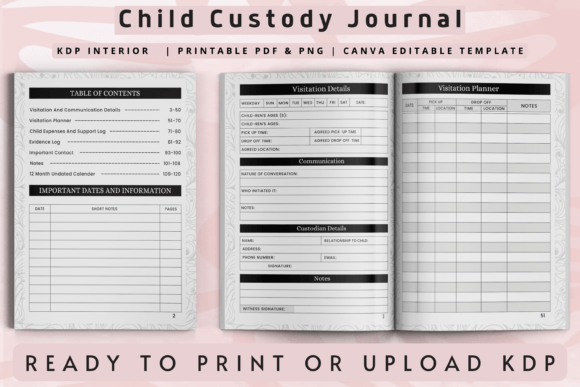
Navigating a child custody arrangement is a complex and emotionally demanding process. For parents involved in these proceedings, organization and clear documentation are paramount. The Child Custody Journal KDP Interior refers to a specific digital template designed for self-publishing platforms like Amazon KDP (Kindle Direct Publishing). It is a structured logbook intended to help a parent systematically track every facet of their custody experience.
This product is not a physical book but a ready-made interior file—including PDF and PowerPoint formats—that entrepreneurs can use to create and sell their own low-content journal on Amazon. For end-users, the resulting printed journal provides a dedicated space to record visitation details, communications, expenses, evidence, and court-related information. The premise is that by consolidating all critical data in one organized place, a parent can reduce stress, present clearer information if needed, and manage the logistical aspects of custody more effectively.
Key Reasons for Interest in a Custody Journal Template
Individuals may seek out a journal based on the Child Custody Journal KDP Interior for several practical reasons. The primary appeal is structure. During custody disputes or while managing an established arrangement, information comes from many sources: phone calls, emails, financial transactions, and personal observations. Without a system, details can be forgotten or misremembered, which can lead to conflict or disadvantage in legal settings.
Another significant reason is emotional and administrative relief. The process of custody is often overwhelming. Having a predefined template removes the burden of designing a logging system from scratch. Sections like a visitation planner, evidence log, and contact list prompt the user to record specific data they might otherwise overlook. This can create a sense of control and preparedness, which is psychologically beneficial during a high-stakes period.
Finally, there is a legal and practical advantage. While a journal is not a substitute for legal advice, meticulously documented patterns of visitation, communication failures, unreimbursed expenses, or behavioral incidents can form a valuable personal record. This documented history can help when consulting with an attorney, mediating with the other parent, or providing information to a court.
Benefits and Practical Applications
The core benefit of using a journal derived from the Child Custody Journal KDP Interior is comprehensive organization. Typical sections included, such as a 12-month undated calendar and dedicated logs for expenses and evidence, allow for chronological and categorical tracking. This can simplify tasks like calculating shared childcare costs or recalling the sequence of events leading to a disagreement.
A secondary benefit is consistency. Using the same format over months or years creates a uniform record that is easier to review and analyze. For parents who are required to report to a court or a custody evaluator, a consistent journal can demonstrate ongoing diligence and responsibility.
Situations Where This Journal is a Strong Fit
This tool is particularly well-suited for parents who are in the midst of an active custody dispute or modification proceeding. The evidence log and court log sections become critically important for tracking dates, filings, and observations relevant to the case. It is also a strong fit for parents with complex arrangements, such as those involving long-distance travel, multiple caregivers, or specific therapeutic guidelines, where detailed planning and logging are necessary to ensure compliance.
Furthermore, it serves parents who simply prefer a paper-based, tactile system over digital apps. Having a physical book can feel more secure and private, and it eliminates concerns about digital data storage or battery dependency. For parents who are already engaged in Amazon KDP as a business, this interior offers a tested product to list and sell to this specific niche market.
Tradeoffs and Important Considerations
While a structured journal offers many advantages, it is important to consider its limitations. First, it is a passive tool. Its effectiveness depends entirely on the user’s discipline to consistently and accurately fill it in. During periods of high stress, maintaining this habit can be challenging.
A second consideration is privacy and security. A physical journal containing sensitive information about legal matters, personal communications, and financial details must be kept securely. Loss or unauthorized access could create significant problems. Some users might find a digital, password-protected system more aligned with their security needs.
Third, the journal is generic. While the Child Custody Journal KDP Interior template covers common scenarios, it may not address every unique situation. A parent dealing with international custody, complex special needs accommodations, or supervised visitation with specific reporting requirements might need to supplement the journal with custom pages or additional logs.
When Alternatives Might Be Worth Considering
For some individuals, alternatives to a pre-formatted physical journal may be more appropriate. If real-time synchronization and sharing are necessary—for instance, with a lawyer or a co-parent using a secure platform—dedicated legal or family organization apps might offer better functionality. These can provide reminders, cloud backup, and easier data compilation.
Another alternative is a simpler, more flexible system. Some parents may find that a standard notebook combined with a filing system for receipts and official documents meets their needs without the structure of a predefined template. This approach offers maximum customization but requires more initial setup effort.
Finally, the most critical alternative is professional legal counsel. A custody journal is a supportive tool, but it does not replace the need for qualified legal advice. In contentious or legally complex situations, consulting with an attorney is the primary action, and any journaling should be done in support of that professional guidance.
Practical Decision-Making Insights
Determining whether a product based on the Child Custody Journal KDP Interior aligns with your needs involves a self-assessment of your situation and habits. Consider the following questions. Do you frequently find yourself struggling to recall dates or details of conversations related to custody? Are you spending time creating your own tracking sheets or notes that are becoming disorganized? Do you value having a single, dedicated place for all custody-related information, separate from your general calendars or notes?
If your answers are affirmative, then such a journal could significantly streamline your management process. However, also evaluate your comfort with physical records versus digital tools, and your commitment to regular upkeep. The journal’s value is cumulative; it is most beneficial when used consistently over time.
For KDP entrepreneurs evaluating this interior for a business product, research the demand in the low-content book market for legal and family organization tools. Analyze the competition and consider how this specific, problem-focused journal meets a clear need for a defined customer segment—parents in custody proceedings. The provided formats, like the editable Canva file, offer flexibility for branding and minor customization before listing.
Aligning the Tool with Personal Goals
The ultimate goal of any custody journal is to reduce administrative chaos and provide a reliable personal record. Whether the Child Custody Journal KDP Interior serves this purpose depends on how its structure matches your specific logging requirements. Its strength lies in offering a ready-made framework for the most common data points in a custody situation. By providing sections for everything from visitation to expenses, it aims to cover the holistic experience.
Before committing, users should clearly define what they hope to achieve: better organization for personal peace of mind, creating a document for legal consultation, or simply ensuring logistical accuracy for complex arrangements. If the journal's predefined sections directly support those objectives, it can be a highly effective tool. If your needs are highly specialized or you require digital integration, it may serve as a useful base but require adaptation or be part of a broader system involving other tools and professional support.