Your Companion for Literary Adventure: The Reading Journal Log Book
For many avid readers, finishing a book often feels like the closing of a door. The characters, themes, and poignant moments fade into a pleasant but vague memory. A Reading Journal Log Book is designed to keep that door open, transforming passive reading into an active, enriching dialogue. It serves as a dedicated space not just to record what you've read, but to process, analyze, and savor the experience. More than a simple list, it becomes a personal archive of your intellectual and emotional journey through literature.
What Is a Reading Journal Log Book?
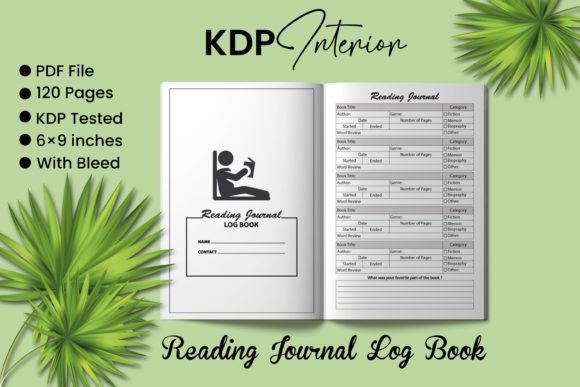
At its core, a Reading Journal Log Book is a structured notebook or interior template designed for bibliophiles. It provides purposeful prompts and layouts that guide you in documenting each book you complete. Unlike a blank journal where you might struggle to organize your thoughts, a log book offers a consistent framework. Typical sections include spaces for the title, author, genre, start and finish dates, personal ratings, and detailed sections for thoughts, favorite quotes, character analyses, and thematic reflections. This systematic approach elevates it from a casual diary to a true tool for deeper comprehension and retention.
The Core Purpose: Beyond Memory Keeping
The primary value of a Reading Journal Log Book lies in intentional engagement. By writing down your impressions immediately after reading, you solidify your understanding and form stronger opinions. It encourages you to pause and consider questions you might otherwise skip: What was the author's central message? Which character resonated most? How did this book change my perspective? This practice turns reading from a consumption activity into a conversation, enhancing critical thinking skills and fostering a more meaningful connection with every text.
Key Features and Characteristics of a Quality Log Book
A well-designed Reading Journal Log Book interior balances structure with flexibility. Key characteristics include:
- Consistent Entry Layouts: Each book entry page follows the same clear format, making it easy to use habitually.
- Comprehensive Prompting: Thought-provoking questions or categories guide your writing without being overly restrictive.
- Space for Both Data and Reflection: Logs basic details like publication year and page count, while also offering ample room for free-form thoughts and analysis.
- Visual and Functional Design: Clean typography, tasteful design elements, and consideration for practical use (like bleed margins for professional printing) ensure it is both beautiful and functional.
For creators and entrepreneurs looking to offer such a product, a ready-to-use interior, like a Download exclusive Reading Journal Log Book KDP Interior file, provides a professional foundation. Such a package typically includes a 6×9 inches trim size, a PDF file at 300dpi for high-resolution clarity, an introductory page, and a substantial number of pages (often 120) to accommodate many books. The inclusion of BLEED settings and testing on platforms like Amazon KDP ensures the final printed product meets quality standards.
Who Benefits from Using a Reading Journal Log Book?
The application of a reading journal is surprisingly wide. It's not solely for literary scholars or students; it's for anyone who wants to deepen their relationship with books.
Avid Readers and Book Club Members
For the personal reader, it creates a treasured archive of their literary life. For book club participants, it provides organized notes to fuel richer discussions, ensuring they can articulate their views clearly and recall specific passages during meetings.
Students and Lifelong Learners
Students analyzing texts for courses can use it to track arguments, symbols, and evidence systematically. Lifelong learners exploring new subjects through books can use it to synthesize information and connect ideas across multiple volumes.
Writers and Content Creators
Authors and bloggers often draw inspiration and insight from reading. A Reading Journal Log Book acts as a research repository, storing observations on writing style, plot structure, and character development that can inform their own creative work or professional critiques.
Professionals Seeking Cognitive Benefits
The act of reflective writing improves memory, focus, and analytical ability. Professionals in any field can use reading journals as a disciplined exercise to sharpen these transferable skills, all while enjoying the personal enrichment of literature.
Practical Applications and Real-World Scenarios
Imagine finishing a complex historical novel. In your Reading Journal Log Book, you jot down the key events, but also note how the author portrayed the era's social tensions. Months later, when referencing that period for a project, your journal provides your distilled insights faster than re-reading the book.
Consider a parent reading with their child. Using a simplified log, they can record the child's reactions, favorite parts, and questions raised, creating a beautiful shared record of growth and learning.
For an online reviewer or podcaster, the journal becomes the backbone of their content. Detailed entries supply ready material for reviews, episode scripts, or social media posts, adding depth and authenticity to their commentary.
Evaluating Strengths and Considerations
A Reading Journal Log Book offers significant strengths. It promotes mindful reading, creates a tangible record of intellectual growth, and can improve comprehension and retention. It provides a satisfying, offline activity that complements digital life.
Potential Limitations and Suitability
It may not suit every reader. Those who read purely for escapist leisure might find the structured reflection cumbersome. The commitment to writing after each book requires a shift in habit. Furthermore, the physical nature of a log book means it needs to be carried or accessed alongside your reading, which some might find inconvenient compared to digital note-taking apps.
When evaluating if a Reading Journal Log Book is right for you or your project, consider your goals. Is it for deep analysis, simple tracking, or creative inspiration? Review the interior's prompts and layout—do they align with how you naturally think about books? For creators publishing on platforms like KDP, assessing the technical quality of the interior file, including its resolution, page count, and bleed setup, is crucial for a professional final product.
Guidance for Implementation and Use
Starting with a Reading Journal Log Book is straightforward. Begin with your next book. Don't pressure yourself to fill every section; start with the basics like title and rating, then gradually explore the reflective prompts. Let your entries vary in depth—some books might inspire pages of analysis, others a brief paragraph. The journal should serve you, not burden you.
For entrepreneurs and self-publishers looking to create and offer such a journal, utilizing a professionally designed, ready-to-upload interior can streamline the process. A high-quality package that is compressed into one ZIP File and pre-tested for platform compliance removes technical hurdles, allowing you to focus on marketing and connecting with your audience of readers.
The Lasting Value of Documenting Your Reading Journey
Ultimately, a Reading Journal Log Book is an investment in your personal narrative. It captures not just what you read, but who you were as a reader at that point in your life. The quotes that moved you, the ideas that challenged you, and the stories that transported you are all preserved. Over years, it becomes more than a log; it becomes a map of your evolving mind and heart, curated through the timeless act of reading. Whether you are a consumer seeking a tool for personal enrichment or a creator providing that tool to others, the focus remains on fostering a more thoughtful, engaged, and recorded literary life.