Your Strategic Companion: The Diamond Painting Logbook
The world of diamond painting, a meticulous and rewarding craft, thrives on both creativity and order. While the finished artwork is a visual triumph, the process itself is a significant project requiring time, resource management, and tracking. For the serious hobbyist or the professional creator, a Diamond Painting Logbook transcends being a simple notebook; it becomes a strategic asset for project management, artistic development, and business operations. This specialized logbook is designed as a dedicated space to chronicle, analyze, and elevate your craft from a sporadic activity to a managed endeavor with clear outcomes.
The Strategic Utility of Tracking Your Craft
At its core, a diamond painting logbook serves as a centralized system. It moves beyond the ephemeral memory of what kit you completed last month or which colors you found challenging. By committing details to a structured log, you create a valuable repository of personal data. This practice transforms random enjoyment into intentional progress. For entrepreneurs running a low-content business selling these logbooks, understanding this utility is key to communicating its value. A Diamond Painting Logbook supports several strategic areas: it aids in project planning by helping you estimate time per canvas size, it enhances learning by documenting techniques and drill preferences, and it can bolster operational efficiency for those who produce multiple pieces, perhaps for sale or gift-giving.
From Hobby to Managed Creative Practice
Consider the difference between casually picking up a kit and approaching your craft with a logbook. The latter encourages you to set goals. Perhaps you aim to complete a large 60x80cm painting within a specific timeframe, or you want to experiment with a new brand of drills. Recording your start date, daily progress notes, and total hours invested provides empirical feedback. This data allows you to make better decisions for future projects. You'll know if a certain canvas size is too ambitious for your current schedule, or if a particular color palette consistently takes longer. This thoughtful approach turns time spent into knowledge gained, increasing both satisfaction and productivity.
Key Use Cases and Planning Considerations
Intentional use of a diamond painting logbook depends on your primary objectives. For the individual hobbyist, its primary function may be to enhance personal enjoyment and track a collection. Entries might include the painting's name, source, completion date, and a personal rating or notes on the difficulty. For the creator who shares their work online—perhaps a blogger, vlogger, or social media influencer—the logbook becomes a content planning tool. Detailed notes on challenges, breakthroughs, and material quality can form the backbone of reviews, tutorials, or process videos, adding depth and authenticity to your brand.
For the small business owner operating in the craft space, such as someone selling finished paintings or related accessories, the logbook shifts into an operational role. It can track inventory of completed works, record customer preferences if commissions are undertaken, and log supplier information for kits and tools. Before relying on a logbook system, consider what you want to achieve. Are you seeking personal reflection, content generation material, or business data? The approach and sections you emphasize will differ accordingly.
Practical Implementation and Template Features
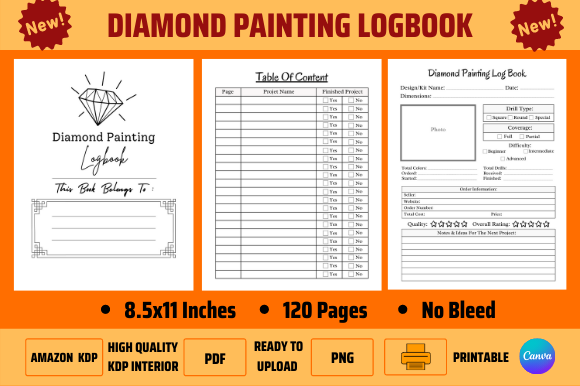
A well-designed Diamond Painting Logbook template, like the 120-page 8.5x11 inch interior, provides the structure without imposing rigidity. Its high-quality resolution and ready-to-print PDF and PNG formats make it a practical tool for immediate use. Effective pages might include: project overview sheets, weekly progress grids, a supplier and kit catalog, a finished works gallery log, and reflection sections for technique notes. The physical act of writing in a logbook creates a pause for thought that digital tracking often bypasses. This reflective pause is where strategic insight often emerges—realizing a pattern of frustration with certain adhesives, or noting a consistent sense of achievement with portrait-style paintings.
- Project Overview Pages: Record title, size, drill count, brand, start/end dates, and overall hours. This establishes a baseline for future planning.
- Progress Logs: Daily or weekly entries documenting sections completed, any issues encountered, and mood or satisfaction levels. This tracks the journey, not just the outcome.
- Materials & Supplier Index: Keep notes on kit quality, drill shape performance, and tool reliability. This informs future purchasing decisions, saving time and money.
- Finished Works Catalog: Create a visual or descriptive record of your completed pieces, including their final disposition (displayed, gifted, sold). This is invaluable for portfolio building.
Risks of Uncontextualized Use and How to Avoid Them
Any tool, including a diamond painting logbook, can become a source of friction if used without clear purpose. The primary risk is turning a relaxing hobby into a burdensome administrative task. Filling out pages for the sake of completion, without considering what information is useful to you, leads to abandoned logs and wasted effort. Another risk is comparative analysis—using your log to unfavorably compare your speed or output to others, which can undermine the creative joy. To use the logbook intentionally, start simple. Decide on one or two key pieces of information you genuinely want to capture, such as time spent or kit ratings. Let your use evolve naturally from there. The log should serve your practice, not dictate it.
Integrating the Logbook into Your Creative Workflow
The most successful integration is habitual but lightweight. Keep the logbook alongside your crafting space. Make a brief entry when you start a session and when you finish. These don't need to be lengthy essays; bullet points on progress and a single line on any observation are sufficient. The cumulative effect over 120 pages of a logbook is a profound resource. For the entrepreneur marketing this interior, highlighting this long-term value—the creation of a personalized reference guide over a year or more of crafting—is a powerful selling point. It's not about a single entry; it's about the aggregated wisdom the book holds after multiple projects.
The Long-Term Value of a Documented Practice
Over time, a diligently maintained diamond painting logbook becomes more than a record; it becomes a strategic planning document for your creative life. You can review it to identify which types of projects bring you the most satisfaction, allowing you to curate future purchases toward that direction. You can spot inefficiencies in your process and adapt. For those considering a commercial angle, the logbook provides data to support decisions: which paintings are most popular with your audience if you share them, or which are quickest to produce if you sell them. The Diamond Painting Logbook facilitates a shift from reactive crafting—buying and doing kits as they come—to proactive crafting, where you steer your hobby or business based on documented experience and clear goals.
Ultimately, the choice to use a logbook is a commitment to treating your diamond painting practice with the seriousness it deserves. Whether your aim is deeper enjoyment, improved skill, content creation, or business development, this tool provides the framework. The ready-to-use interior, with its clean design and ample space, removes the barrier of creating your own system. It invites you to start today, with your next project, and begin building the strategic resource that will inform and enhance your craft for all the projects to come.